In a city, an ambulance usually has a clear road to follow. But in a remote village, mining camp, or mountain area, the road can change quickly. A short trip on the map may become a slow rescue. The road may be muddy after rain. It may be full of loose stones. It may also be too narrow for a regular van.
This is where an off road ambulance for remote areas becomes important. It helps medical teams reach patients when standard ambulances may struggle. For hospitals, rescue centers, rural clinics, and government emergency teams, the key question is simple: Can the ambulance arrive on time, load the patient safely, and support care during transport? Since emergency care is time-sensitive, poor road access can quickly become more than a transport issue. It can affect the whole rescue process.
This article explains how off road ambulances solve this problem with better mobility, safer patient transport, and stronger adaptability on difficult roads.
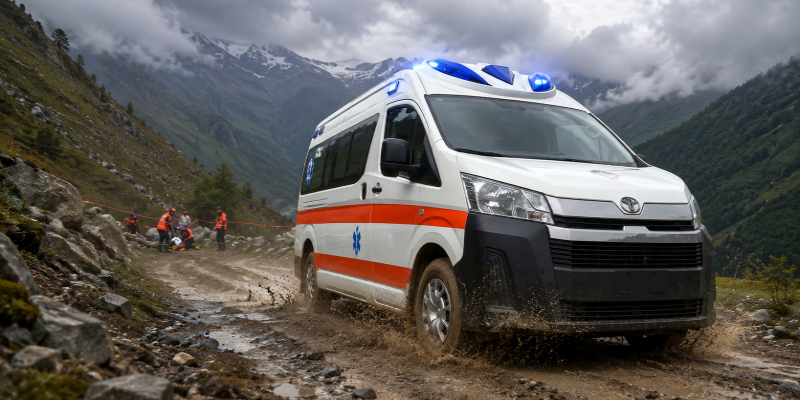
Table of Contents
The Real Problem: Standard Ambulances on Bad Roads
In many remote areas, the biggest rescue challenge is not medical care itself. It is the road.
A standard ambulance can work well in cities, but it may struggle on muddy roads, mountain paths, gravel tracks, or flooded routes. When the vehicle cannot move smoothly, rescue teams lose valuable time.
For patients, this can mean:
- Longer waiting time
- Higher transport risk
- Delayed medical support
- Limited access to hospitals
This is why an off road ambulance for remote areas is needed in many rural, mining, and mountain rescue projects. It helps solve the first problem in emergency rescue: reaching the patient safely and quickly.
How an Off Road Ambulance Improves Emergency Access?
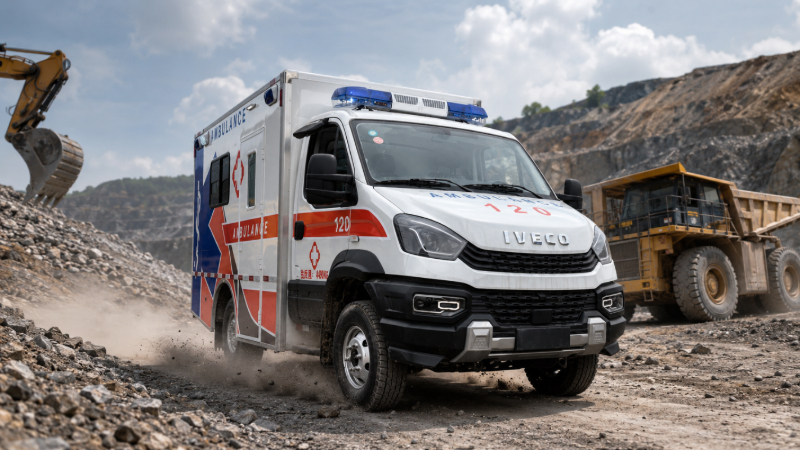
An off road ambulance is designed for places where normal road conditions cannot be guaranteed.
With stronger road adaptability, a 4×4 off road ambulance can perform better on rough ground, wet roads, slopes, and uneven surfaces. A 4 wheel drive ambulance also gives drivers better control when the route is difficult.
This makes it useful for:
- Rural clinics
- Mountain rescue teams
- Mining sites
- Construction areas
- Remote government medical projects
For these users, the vehicle is not just for patient transport. It is a tool to improve emergency access in places where every minute matters.
Medical Cabin Support for Remote Patient Transport
Good mobility helps the ambulance reach the patient. But in remote rescue work, the medical cabin also needs to be practical. When the hospital is far away, medical staff may spend a long time with the patient inside the vehicle. A well-planned cabin can make this process safer and easier.
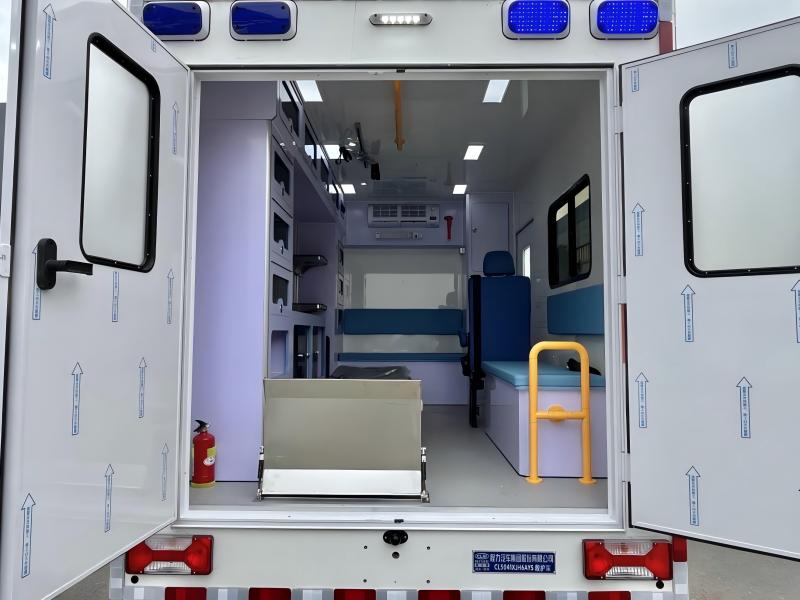
For an off road ambulance for remote areas, the basic cabin usually needs:
- Stretcher and fixing system for safer loading and transport
- Oxygen supply system for basic respiratory support
- Medical cabinet for medicines and first-aid supplies
- Interior lighting for night or low-light rescue
- Air conditioning or ventilation for cabin comfort
- Easy-clean interior materials for daily hygiene
Some projects may also need extra oxygen outlets, an inverter, a suction device position, or space for monitors and other first-aid equipment. These options should match the actual rescue task, not just make the vehicle look more advanced.
For public tenders or regulated medical transport projects, buyers can also review common road ambulance design and equipment standards before confirming the final cabin layout. Standards such as EN 1789 can be a useful reference for ambulance equipment, patient compartment design, and transport safety.
How to Choose the Right Off Road Ambulance for Remote Areas?
Not every rescue project needs the same ambulance. A good choice should start with the road, the rescue distance, and the type of patient transport. Before choosing an off road ambulance for remote areas, buyers should match the vehicle with the real working conditions.
Step 1:Match the Chassis to the Road
For muddy roads, gravel roads, or mountain routes, a 4×4 chassis is usually more suitable than a standard van platform. It gives the ambulance better traction and control when the road surface is unstable. If the area has steep slopes or loose stones, buyers should also pay attention to ground clearance, tire grip, and suspension strength.
Step 2:Plan for Long-Distance Patient Transfer
If the hospital is far away, the ambulance should provide more than basic seating and a stretcher. For long-distance transfer, consider:
- Oxygen supply system
- Stable stretcher fixing system
- Air conditioning or ventilation
- Enough space for medical staff
- Medical cabinet for emergency supplies
These details help keep patient care more stable during the journey.
Step 3:Choose the Right Vehicle Size
For narrow village roads or tight rural routes, a compact or mini ambulance may be easier to operate.
For mining sites, mountain rescue, or rough construction roads, a larger 4×4 model may offer better stability and stronger road performance.
Step 4:Check Local Rules Before Ordering
Driving side, emission standard, vehicle size, import documents, and certification requirements can vary by market. Before confirming the model, buyers should check these details with their local importer, agent, or authority. This can help avoid delays after the vehicle arrives.
The best ambulance is not always the largest or most expensive one. It is the one that fits the rescue route, road condition, and daily medical use.
Step 5:Consider Maintenance and Spare Parts Support
For remote rescue projects, maintenance is just as important as vehicle performance. If the ambulance works far from a major city, buyers should check whether common spare parts, tires, filters, lights, and basic medical cabin fittings are easy to replace.
A good off road ambulance for remote areas should be practical to service, not difficult to repair. This can help reduce downtime and keep the vehicle ready for daily rescue work.
Conclusion
For rescue teams working outside the city, a regular ambulance is not always the safest choice. The route may be a muddy village road, a steep mountain path, or a mining site far from the nearest hospital. In these conditions, the ambulance must do more than carry a patient. It needs to help the team arrive, load safely, and return without adding more risk.
That is why an off road ambulance for remote areas should be chosen based on the real rescue route, road conditions, cabin needs, maintenance support, and local import rules. The right ambulance is not simply the biggest or most expensive model. It is the one that can keep working when the road, weather, and rescue tasks are not ideal.
Ready to improve emergency access in remote areas? Contact CLW today to discuss a customized off road ambulance for sale. We can help you choose a practical solution based on your road conditions, rescue distance, medical cabin needs, and local operating requirements.